Before we write a single line of code, we must define our mission. As senior engineers, we first have to understand and plan for the problem we are going to solve. To understand our requirements, we first have to understand the problem Redis was created to solve.
The Problem: Disk Speed Bottleneck
Traditional databases are bound by the physical speed of a
hard drive. Even with modern SSDs, reading from a disk
compared to reading from RAM is like going from the speed of a turtle to the speed of a supersonic jet ( 600,000x ) faster.
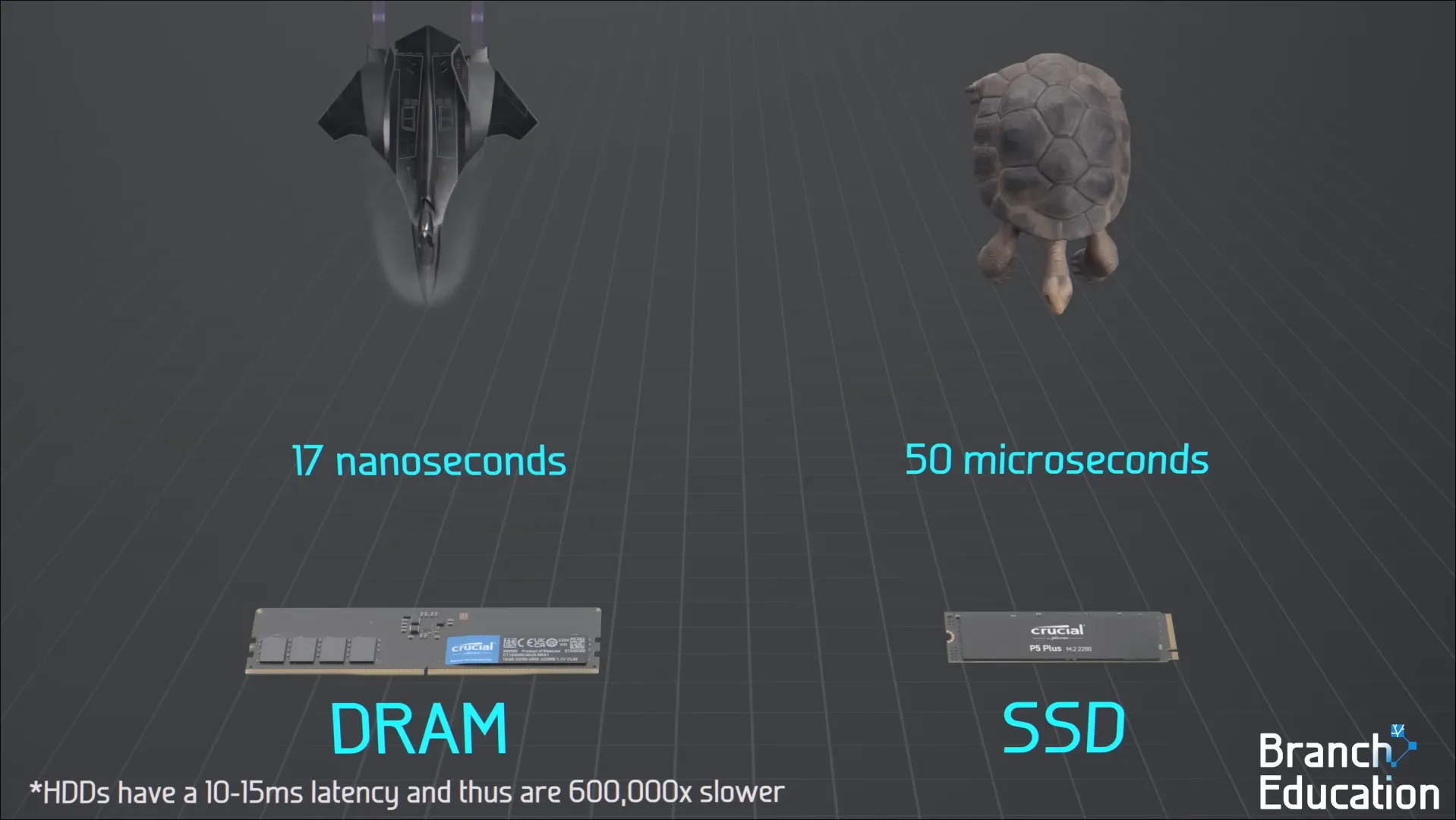
Redis sits between your application and your database acting
as a high-speed cache layer. Instead of hitting the database
on every request, Redis intercepts the most frequently requested data and serves
it directly from RAM — orders of magnitude faster.
The difference is easier to see than to explain:
Notice how without Redis, every request travels the full distance to the database. With Redis, the most frequent requests never reach it at all — they are intercepted and answered instantly. That single interception is the entire value proposition of Redis, and building the engine behind it is what this article is about.
Our Primary Requirements: Latency & Concurrency
To build a successful clone, our system must excel in two specific areas:
- Optimized Lifecycle: Every stage of the command lifecycle —from Tokenization to Storage —must be as fast as possible. While we will prioritize clarity and education in our implementation, I will highlight specific optimizations throughout the article that you can use to push your clone's performance even further.
- High Concurrency: Our server must handle thousands of simultaneous connections. We will use Go’s basic concurrency model for this purpose and run benchmarks to verify our results. Keep in mind that while we are keeping it simple for this guide, I’ll point out more advanced architectural models you can use to push these limits.
Engineering Constrains
- Standard Library Only: No external dependencies. We build every component ourselves to master the implementation details.
- RESP Compliance: We will build our own custom Client to handle serialization and communication. To ensure absolute accuracy, our implementation will strictly follow the official RESP specifications provided by Redis. This allows us to master the protocol from both the sender and receiver perspective.
I hope you’re as excited as I am! We’re about to learn a lot about Redis, Parsers, and even a bit of Interpreters. So, open your code editor and grab a cup of coffee—this is going to be a great project!